The Complete Student Storage Guide for University of Guelph

If you're studying at the University of Guelph, you've probably already discovered that a residence room fills up faster than you'd expect. Between textbooks for a full course load, winter coats and boots, summer clothes, sports gear, and the small appliances that make dorm life livable, the space disappears quickly.
When you don't live a short drive from campus, hauling everything home for the summer or over a study term abroad isn't realistic. That's exactly the kind of situation where a nearby storage unit
saves you money, time, and a lot of stress. This guide walks you through everything you need to know about renting
student storage in Guelph, even if you've never rented a unit before.
We'll cover how to pick the right size, how to split costs with roommates, when to rent so you're not scrambling during the end-of-semester rush, and what to expect from the rental process. By the end, you'll know exactly how to handle your belongings between semesters without overpaying or overthinking it.
How Close Is Storage to the U of G Campus?
Apple Self Storage sits at 110 Stevenson Street South, just east of downtown Guelph and roughly a 10-minute drive from the University of Guelph campus. Proximity matters more than students often realize. If you suddenly need your bike when the weather warms up, or you packed away a textbook you actually need for an exam, a facility this close means you can swing by without rearranging your whole day. The location near downtown also works well for students living in popular rental areas along Gordon Street, in the south end, or closer to the core, so you're rarely going far out of your way.
Why Guelph Students Need Storage
A huge number of students move into off-campus housing after their first year, often into shared houses and apartments downtown, along Gordon Street, or in the south end near transit and shopping. Every one of those moves creates a gap where your stuff needs somewhere to go, especially when a new lease doesn't start the same day your old one ends.
Summer is the other big driver. Winter semester classes wrap up and exams finish around the end of April, and many students head home or travel for the summer rather than pay four months of rent on an empty room. Rather than dragging a mattress, mini-fridge, and a semester's worth of belongings across the province twice, students keep it all in a Guelph storage unit and pick up where they left off in September. If you're heading out on a study abroad term or a co-op placement in another city, storage solves the same problem for a longer stretch.
Practical Tips for First-Time Student Renters
1. Be Honest About What's Worth Keeping
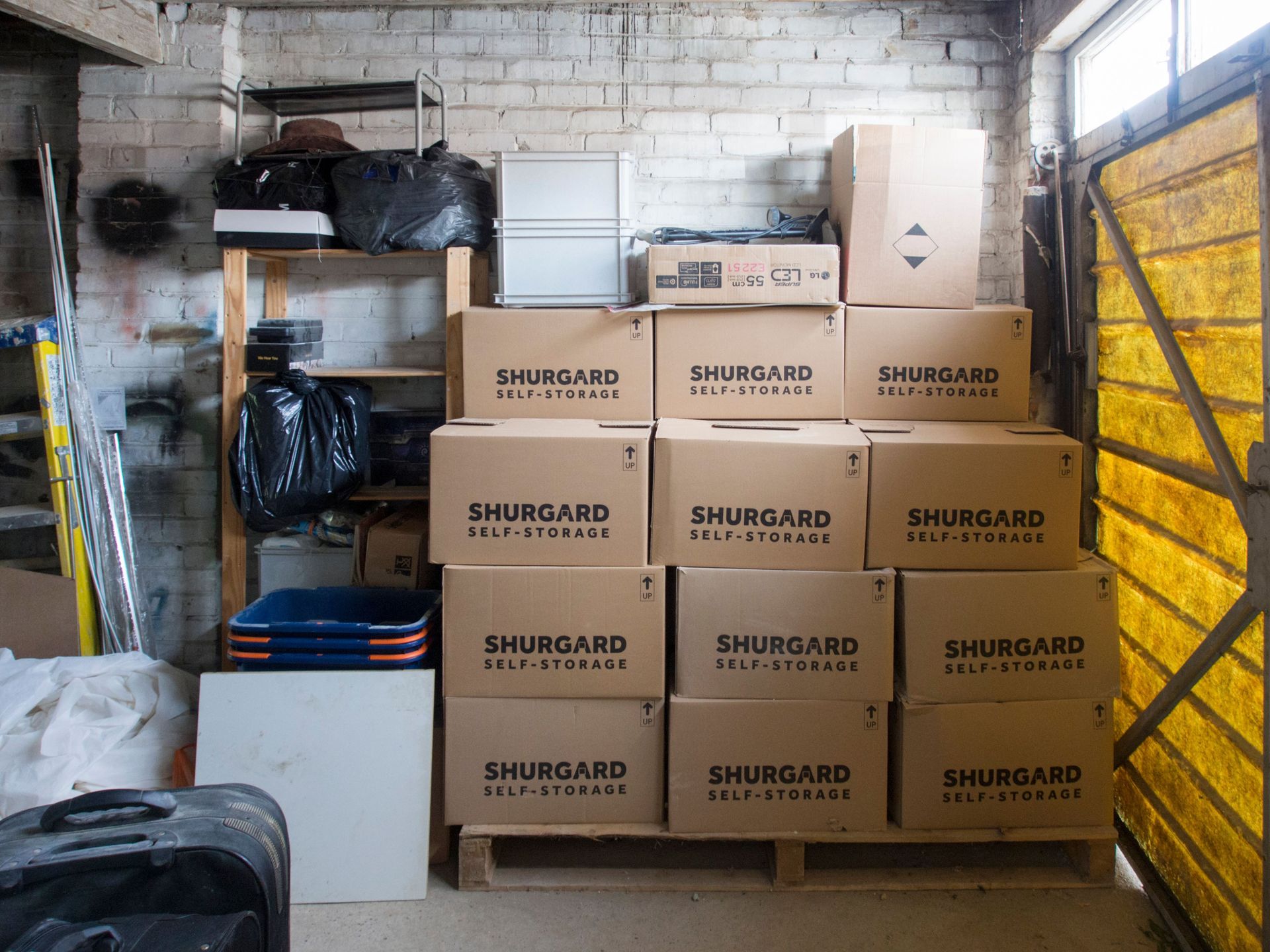
Before you rent anything, sort your belongings into what you'll genuinely use again and what you're holding onto out of habit. The intro-course textbooks you'll never open again aren't worth a monthly storage fee, but your winter gear absolutely is. Sorting first often means you can rent a smaller, cheaper unit than you expected.
2. Use Clear Plastic Bins, Not Cardboard
Plastic totes hold up far better than cardboard boxes, which can sag or attract moisture during Guelph's humid summers and damp shoulder seasons. They stack cleanly, they're reusable semester after semester, and you can see what's inside without tearing everything open. Snap-lid bins also keep dust off your bedding and clothes while they sit.
3. Label Like You'll Forget Everything
Writing "stuff" on a box guarantees you'll be opening five of them in September looking for your desk lamp. Be specific with labels like "winter sweaters and boots" or "kitchen and small appliances" so the right box is easy to grab. Future-you, moving in during the August rush, will be grateful.
4. Rent Before the End-of-Semester Crunch
The weeks around the end of winter exams in late April are the busiest storage period of the year in a university town like Guelph. Reserve your unit a couple of weeks early so you get the size you want and aren't competing with every other student doing the same thing. Month-to-month leases mean an early start costs very little for the peace of mind.
5. Split a Unit With Roommates
If you live with one or two housemates who are also storing things over the summer, sharing a single larger unit is almost always cheaper than each of you renting your own small one. Agree up front on who pays what and how access works, and keep each person's items grouped and clearly labelled. It's one of the simplest ways to cut your storage bill in half or better.
6. Protect Electronics and Documents With Climate Control
Guelph summers get warm and humid, and winters get cold, and those swings can be hard on electronics, instruments, photos, and important paperwork. A temperature-controlled unit keeps conditions steady year-round so you're not gambling with anything valuable. For most students, only a portion of what you store truly needs it, so reserve climate control for the items that matter.
7. Measure Before You Commit
A few minutes estimating what you actually need to store saves you from paying for empty space you'll never fill. Stack your boxes in a corner, picture your furniture, and match that to a unit size rather than guessing big "just in case." Right-sizing is the single biggest factor in keeping your monthly cost reasonable.
Understanding Storage Unit Sizes
If you've never rented before, the measurements can feel confusing at first. Storage units are described by their floor dimensions in feet, so a 5x5 unit is five feet wide and five feet deep. Keep in mind that you can stack items toward the ceiling too, so the usable space is more than the floor footprint suggests. Here's how the three most common student sizes break down.
5x5 Storage Unit (25 square feet)
This is the smallest standard size and works a lot like a small closet. It fits roughly 10 to 15 boxes plus a few small items like a desk chair, a mini-fridge, or a fan, which makes it perfect for a single student storing clothes, books, and a bit of dorm gear over the summer. If you live light and don't have much furniture, this is usually the most budget-friendly choice. In Guelph, smaller units like this typically sit at the lower end of the local price range.
5x10 Storage Unit (50 square feet)
About the size of a walk-in closet, a 5x10 comfortably holds the contents of a typical residence room or a small bedroom. You can fit a mattress and frame, a few pieces of furniture, 20 to 30 boxes, and bulky seasonal gear like a bike or skis. This is the size most students reach for when moving between a dorm and an off-campus place, and it's also a comfortable fit for two people to share.
10x10 Storage Unit (100 square feet)
This one is roughly the size of a small bedroom and gives you serious room to work with. A 10x10 can hold a full bedroom set, a couch, a TV, kitchen appliances, and 30 to 50 boxes, which is why students with a furnished off-campus apartment lean on it during a move or summer away. Because the cost per square foot is usually better than the smaller units, it becomes genuinely economical when two or three roommates split it.
How to Keep Storage Costs Down
The most effective way to lower your bill is to share. Splitting a 10x10 unit three ways almost always beats each person renting a separate 5x5, and you still have plenty of room if you organize it well. Just sort out payment and access expectations before move-in day so there are no surprises about who owes what or who has the gate code.
Timing and sizing do the rest of the work. Renting a few weeks ahead of the late-April exam rush gives you better availability and a calmer move-out, and choosing a month-to-month lease means you only pay for the months you actually need. Resist the urge to rent bigger "just to be safe," since an oversized unit is the most common way students overspend. A little planning around when and how much you store keeps the whole thing affordable.
What Guelph Students Usually Store
Most students store a predictable mix of furniture, seasonal items, and everyday belongings. That typically includes dorm and apartment furniture like beds, desks, and dressers, small appliances such as mini-fridges and microwaves, off-season clothing and bedding, textbooks and course materials, and sports or outdoor gear like bikes and skis. Students heading home for the summer or leaving on a study abroad term often store nearly everything they own, while those just bridging the gap between two leases might only need space for furniture and a stack of boxes. Whatever the situation, it usually fits into one of the standard sizes once you've sorted out what's actually worth keeping.
Ready to Store? Here's Where to Start
First-time storage doesn't have to be complicated. With the right size unit, clear labelling, and a facility close to campus, you can make life at the University of Guelph far more manageable between semesters and moves. Apple Self Storage at 110 Stevenson Street South sits about 10 minutes from campus and offers exactly what students tend to need, including flexible month-to-month leases, temperature-controlled units, and a range of sizes that runs from compact 4x5 units all the way up to large climate-controlled spaces.
The facility is built for easy move-ins, with dollies and carts on hand, a covered loading zone so you're not hauling boxes through the rain or snow, and elevator access to upper-floor units. Daily access runs from 6:00 am to 10:00 pm, automatic payments keep your bill on autopilot while you focus on classes, and there's even a business centre on site if you need it. Whether you're storing a room's worth of belongings over the summer, moving between off-campus places, or heading abroad for a term, you can reserve a unit online or call to get set up. Stop by 110 Stevenson Street South in Guelph to find the right fit before the end-of-semester rush hits.